How to Build Scalable AI Systems That Drive Enterprise Growth in 2025
Enterprise AI adoption has reached a critical inflection point. While 85% of executives plan to increase AI investments in 2025, only 23% have successfully scaled AI beyond pilot programs. The difference? A strategic approach that treats AI as an enterprise transformation tool, not just a technology upgrade.
Organizations that successfully scale AI systems achieve 3x faster revenue growth and 40% higher operational efficiency. This isn’t happening by accident—it’s the result of deliberate strategy, robust infrastructure, and a clear understanding of AI’s role in driving business outcomes.
Key Takeaways
- Strategic AI planning delivers 3x ROI compared to tactical implementations
- Scalable AI architecture requires data governance, security, and change management
- Enterprise AI success depends on workforce readiness and executive alignment
- 2025 AI trends: autonomous operations, ethical AI frameworks, and hybrid intelligence
The Enterprise AI Maturity Gap
Most organizations are stuck in what we call the “AI pilot purgatory”—endless proof-of-concepts that never translate into enterprise value. The problem isn’t technical capability; it’s strategic approach.
Common AI Implementation Failures:
- Lack of clear ROI metrics and business alignment
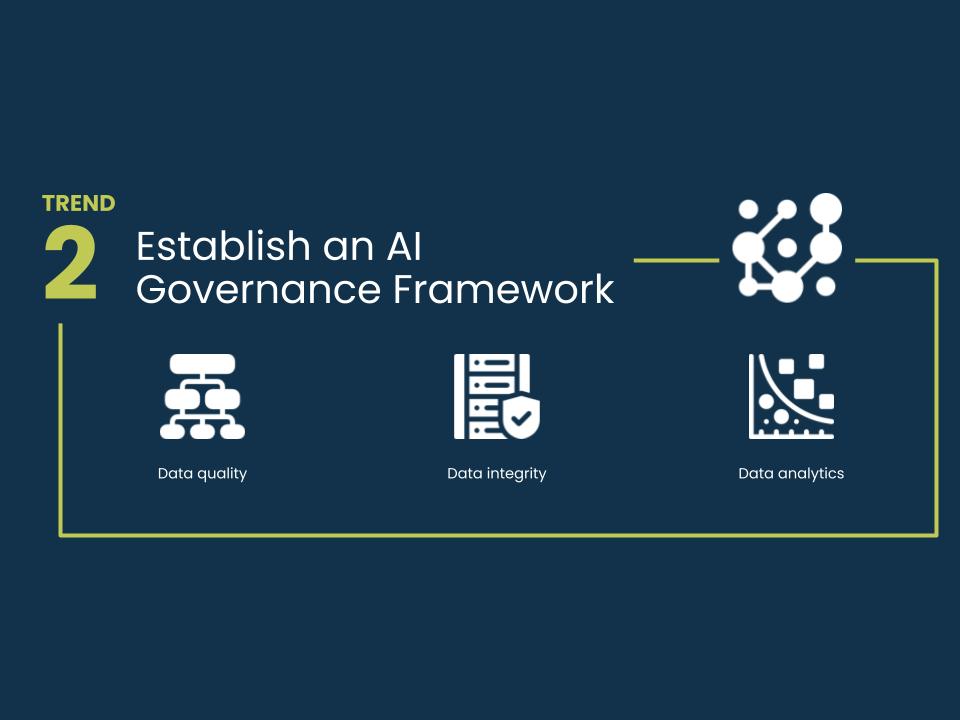
- Insufficient data quality and governance frameworks
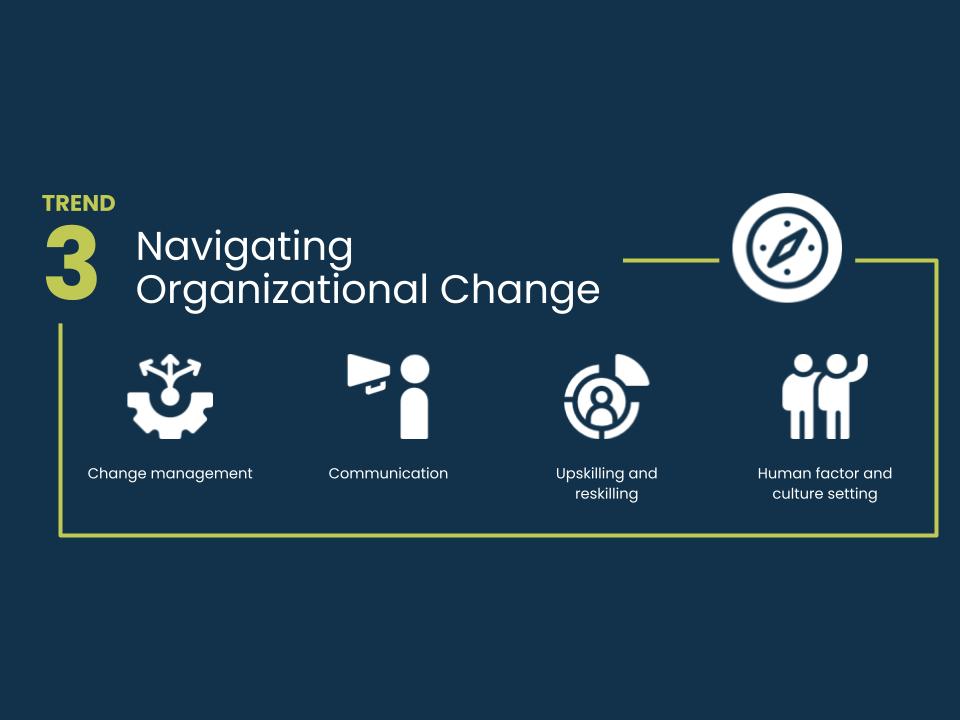
- Inadequate change management and workforce preparation
- Fragmented AI initiatives without enterprise coordination
- Underestimating cybersecurity and compliance requirements
What Successful AI-Driven Organizations Do Differently
Companies achieving AI scale operate with three fundamental principles:
1. Strategic AI Vision Alignment
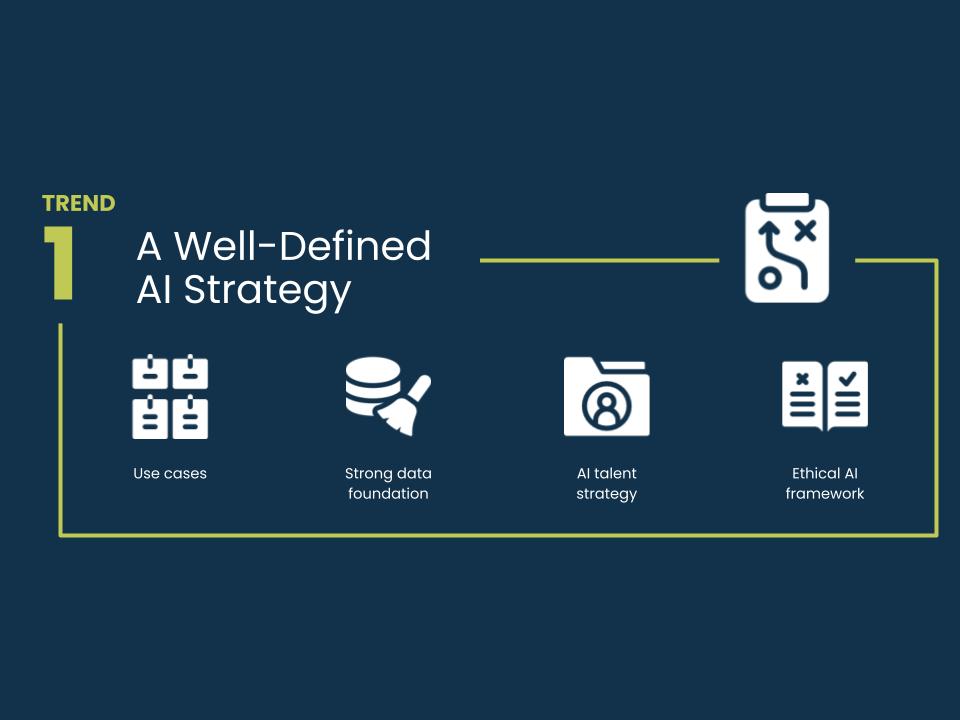
They treat AI as a business strategy, not a technology project. Every AI initiative directly connects to revenue growth, cost reduction, or competitive advantage. Leadership defines clear success metrics before any development begins.
2. Enterprise-Grade AI Infrastructure
Scalable AI requires robust data pipelines, security protocols, and integration capabilities. These organizations invest in foundational architecture that supports multiple AI use cases simultaneously.
3. Organizational AI Readiness
They prepare their workforce for AI collaboration through targeted upskilling, clear governance frameworks, and change management processes that ensure adoption success.
The OGx AI Strategy Framework
Our proven methodology helps enterprises move from AI experimentation to scalable implementation:
Phase 1: Strategic Assessment
AI readiness audit, use case prioritization, ROI modeling
Phase 2: Architecture Design
Data governance, security framework, integration planning
Phase 3: Implementation
Agile development, testing protocols, performance monitoring
Phase 4: Scale & Optimize
Enterprise rollout, continuous improvement, expansion strategy
Building Your AI Strategy: The 2025 Playbook
1. Define Your AI North Star
Before selecting tools or technologies, establish your AI vision:
- Business Impact Goals: Revenue increase, cost reduction, customer experience enhancement
- Success Metrics: Specific, measurable KPIs tied to business outcomes
- Timeline & Milestones: Phased approach with clear deliverables
- Resource Requirements: Budget, talent, infrastructure needs
2. Assess Your AI Readiness
Conduct a comprehensive evaluation across four critical dimensions:
Data Maturity: Quality, accessibility, governance, and compliance of your data assets
Technical Infrastructure: Cloud capabilities, integration systems, security protocols
Organizational Capability: Leadership support, change readiness, skill gaps
Regulatory Environment: Industry compliance requirements, ethical AI considerations
3. Prioritize High-Impact Use Cases
Apply the “AI Impact Matrix” to identify optimal starting points:
- High Business Value + Low Technical Complexity: Quick wins (process automation, predictive maintenance)
- High Business Value + High Technical Complexity: Strategic investments (customer intelligence, supply chain optimization)
- Low Business Value + Low Technical Complexity: Learning opportunities (internal tools, workflow enhancement)
4. Design for Scale from Day One
Enterprise AI architecture must support multiple use cases and future growth:
- Modular AI Platform: Reusable components, APIs, and microservices
- Data Pipeline Architecture: Real-time and batch processing capabilities
- MLOps Framework: Automated testing, deployment, and monitoring
- Security & Governance: AI model validation, bias detection, audit trails
🎯 Real-World Success Story
Challenge: A Fortune 500 manufacturing company struggled with supply chain disruptions, losing $50M annually due to inefficient inventory management.
Solution: OGx implemented an AI-powered demand forecasting and inventory optimization system using our strategic framework.
Results: 35% reduction in inventory costs, 60% improvement in demand prediction accuracy, and $30M in recovered revenue within 18 months.
“The key wasn’t just the AI technology—it was the strategic approach that aligned our AI investments with clear business outcomes.” – Chief Operations Officer
AI Trends Shaping Enterprise Strategy in 2025
Autonomous Operations
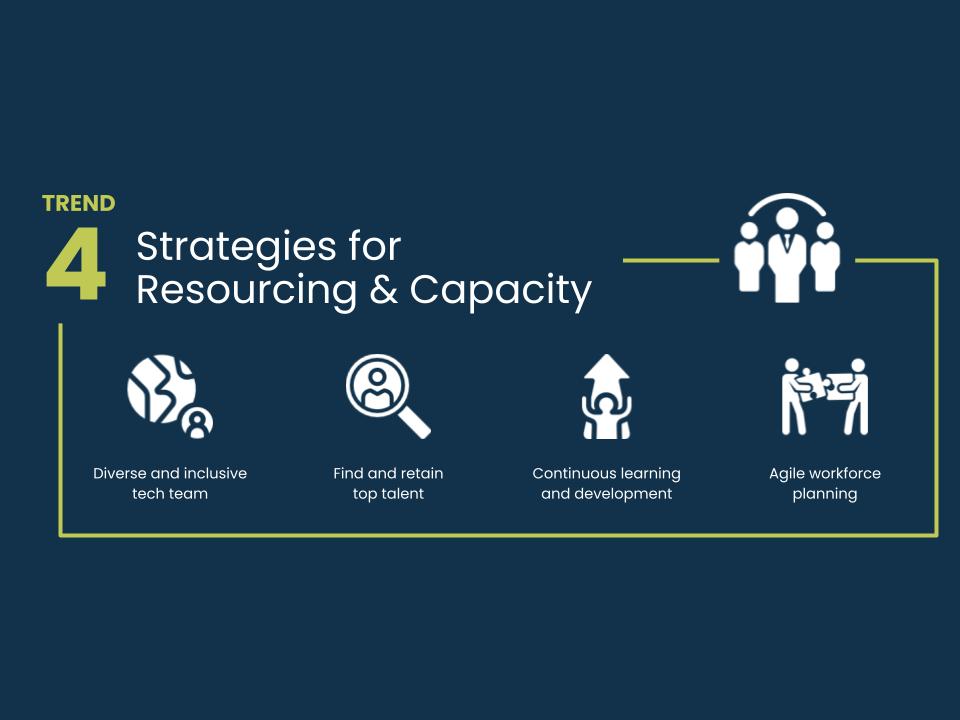
AI systems that can make decisions, execute tasks, and self-optimize with minimal human intervention. Focus areas include autonomous supply chains, self-healing IT infrastructure, and intelligent customer service orchestration.
Ethical AI and Responsible Innovation
Regulatory pressure and brand reputation requirements are driving investment in AI governance frameworks. Companies are implementing bias detection, explainable AI, and ethical review processes.
Hybrid Intelligence Models
The most successful implementations combine AI capabilities with human expertise. This approach maximizes both efficiency gains and decision quality while maintaining organizational trust.
Industry-Specific AI Platforms
Generic AI tools are giving way to specialized solutions designed for specific industries, compliance requirements, and business processes.
Getting Started: Your AI Strategy Checklist
Immediate Actions (Next 30 Days):
- □ Conduct executive alignment session on AI vision and priorities
- □ Assess current data quality and accessibility
- □ Identify 3-5 high-impact use cases for evaluation
- □ Review cybersecurity and compliance requirements
Short-Term Goals (Next 90 Days):
- □ Complete comprehensive AI readiness assessment
- □ Develop business case and ROI model for priority use cases
- □ Design foundational AI architecture and governance framework
- □ Create change management and workforce development plan
Strategic Milestones (6-12 Months):
- □ Launch first AI pilot with clear success metrics
- □ Establish AI Center of Excellence and governance processes
- □ Implement enterprise AI platform and MLOps capabilities
- □ Scale successful pilots across the organization